Builder Decade — hero

Builder Decade

Building things in the AI era — software, hardware, and projects for the long game, one decade at a time. Field notes from a solo builder shipping real products with AI agents. No hype, no tutorial-farm noise. Just what actually works, explained clearly and tested against the evidence.

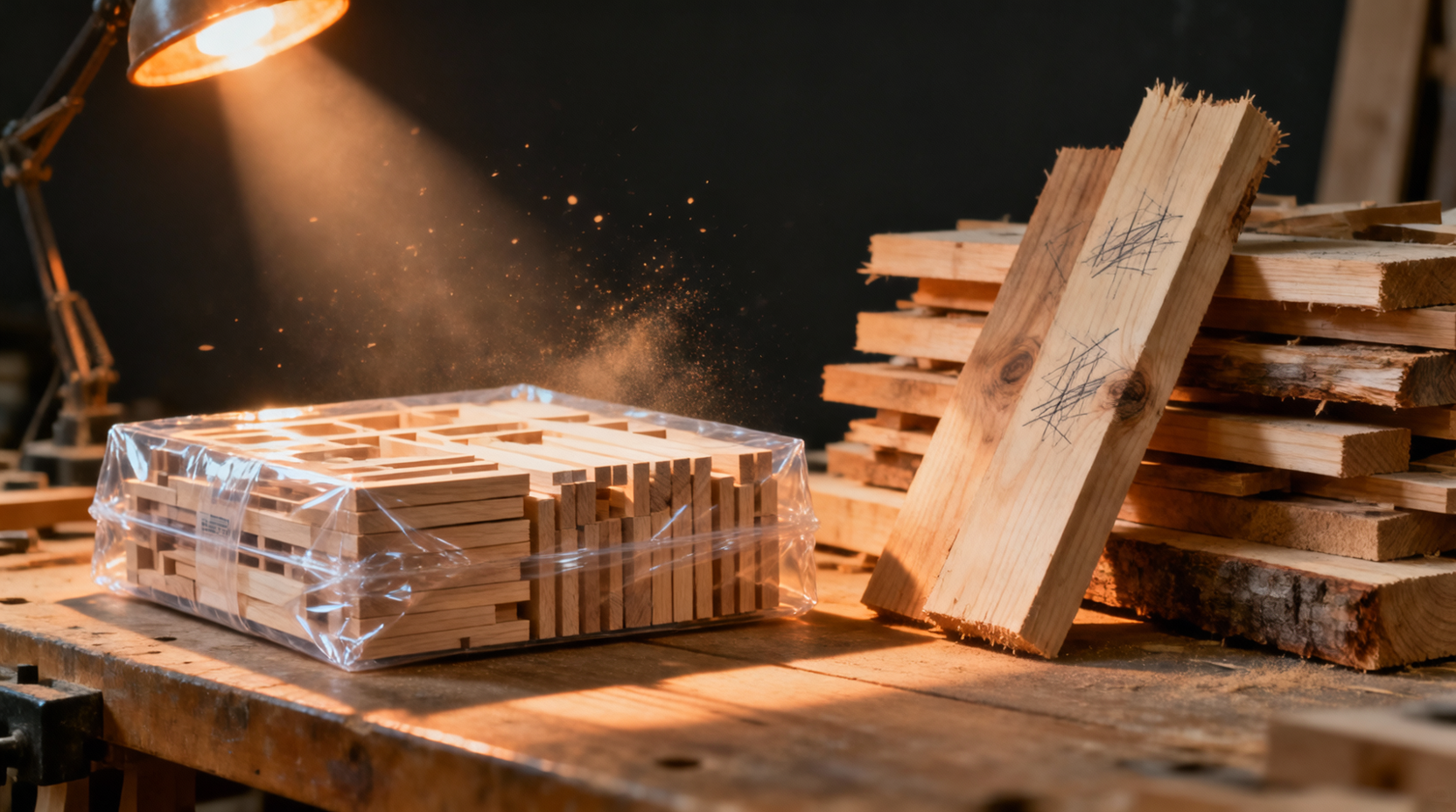
A wooden workbench with a pre-cut parts kit beside a hand-cut stack of raw timber

Is a SaaS App Template Worth Paying For as a Solo Builder?

A template costs $99 to $499. Raw hours cost nothing on the invoice and everything on the calendar. That comparison is why solo builders buy templates, and it is also why they regret it. The mistake is not buying one. It is comparing the sticker price to zero, when the real comparison is the sticker price against the hours you would have spent — and the hours you will still spend afterwards. ...

Two blank brass nameplates lying side by side on a dark workbench, one polished and one tarnished, a small engraver's chisel resting between them, warm lamplight from the left picking out the brushed metal texture, soft shadow beneath each plate

Solopreneur or Solo Founder: What to Call Yourself When Nobody Gave You the Title

I have called myself a solo founder, a solo builder, and — on bad days — “just me.” Each word was accurate. Each one also did work I hadn’t asked it to do. Nobody hands you a title when you start. You pick one, usually in the first week, usually in a bio field with a character limit. Then you spend years living inside it. So it’s worth ten minutes of care. ...

A bare green circuit board lying flat on a scarred old wooden workbench, a few unmarked black chips on the board, a brass-rimmed magnifying glass beside it, scattered capacitors and a coiled multicoloured wire, warm light raking from a brass desk lamp at upper left, dust suspended in the beam

Choosing the Brain of a Physical Product: The Decision Every Hardware Guide Skips

I have written about enclosures, tolerances, cash flow, and the pipeline from digital to physical. Every one of those posts is a footnote to a decision I never named. What chip runs the thing. It is the first real commitment in any physical product, and it is the one your enclosure dimensions, your battery life, your firmware, your certification path, and your unit cost all hang off. Get it wrong and you redesign the board. Get it wrong late and you redesign the enclosure too. ...

A wall of sealed plain cardboard boxes stacked on a cold concrete warehouse floor, an open silver laptop with a dark screen beside them, a blank unmarked envelope resting on top, hard white light cutting through dust

Hardware Isn't Sold, It Moves: The Cash Flow That Kills First-Time Builders

Every hardware post I have read, including the ones on this site, is about making the thing. None of them is about the thing that actually decides whether you survive making it. Here is the sentence that matters, and it is boring: Software collects before it costs. Hardware pays before it earns. Read it again, because the whole failure of first-time hardware builders hides in the gap between those two verbs. ...

A printed plastic enclosure half open on a workbench, a brass heat-set insert glowing in a soldering iron tip beside a small pile of machine screws, an unlabelled caliper resting across the part

Printed Enclosure Tolerances: The Numbers Nobody Selling You a Tool Will Give

If you search for how thick to make an enclosure wall, every result on the first page is written by someone who wants to sell you something. The design-software company says use their generative tools and the tolerances will take care of themselves. The print-on-demand service says upload your model and let them decide. The CAD course says the numbers matter less than the workflow. The advice is not necessarily wrong. It is just that none of these people have any incentive to make you able to do it without them. ...

An open laptop with its screen switched off, connected by a single cable to a half-machined metal bracket held in a bench vise, with metal shavings and a closed caliper beside it

The Digital-to-Physical Pipeline: Why Your Software Skills Stall on Real Products

Almost everyone who crosses from software into physical products stalls at the same place, and it is almost never the place they expected. They assume the wall is competence. So they study — CAD, tolerances, material selection, DFM. They watch the machining videos. They buy the calipers. And then, roughly three months in, they have a folder of very good models and nothing in their hands, and they cannot say exactly what went wrong. ...

A desktop laser engraver beside a stack of finished engraved boards, a calculator and a notebook

Does a Laser Engraver Pay for Itself? The Payback Math, Checked

Search “does a laser engraver pay for itself” and the internet hands you a number. Usually under two months. That number is arrived at with a real formula, and the formula is correct. What gets slipped past you is the sales volume plugged into it. So here is the whole sum in the open: the vendor’s version, the same arithmetic with a real sales volume, and the three lines you should add before you spend the money. ...

A finished painted 3D print on a workbench beside paint pots, brushes and a primed grey figure

Painting 3D Prints: Where a Plastic Toy Becomes an Object People Keep

There is a moment every person who buys a 3D printer goes through. The first print finishes, you lift it off the plate, and it is fine. It’s the shape you wanted. It works. And it looks exactly like what it is: extruded plastic, with visible layer lines and a matte flatness that reads as “prototype” no matter what the object is. Most people stop there. The printer goes on a shelf, and the machine gets filed under “neat, but I don’t have a use for it.” ...

A sorting tray of blank unlabelled cards, one card lifted out and set apart from the rest

Claude Duet Explained: What It Does, Who Can Use It, and What You Give Up

Anthropic released something on 21 October that most people will skim past, because it looks like another assistant. It is worth ten minutes, because the thing it changes is not speed. It changes who decides what you spend your morning on. It is called Claude Duet. Before arguing about it, here is what it actually is. What Claude Duet is, in one paragraph Duet is a proactive agent. Instead of waiting for your question, it watches the apps you connect and comes to you: it scans your inbox, calendar, invoices and messages every few hours, writes a short morning brief of what it thinks matters, and messages you during the day when something needs doing. It also works while you are away — it runs on a computer of its own in the cloud, so it keeps drafting replies or chasing unpaid invoices after your laptop is shut. In Anthropic’s own words, it is “designed for judgment — deciding what needs you, what can wait, and when to check first.” ...

A workshop shelf of blank unlabelled crates, one slot empty where a component used to sit

The Day Your AI Vendor Shuts Down: How to Price Exit Cost

An app can ship, work perfectly, and pass every test — and then stop working because somebody else changed a string. Not your code. Not your deploy. A model name in an API call. The endpoint stayed up; the model behind it was retired, and the API politely returned a 404 in a JSON envelope, as though your request had always been malformed. This is not a rare edge case. It is the normal operating rhythm of a market where models are released, superseded and withdrawn on a schedule you do not control. And it lands differently on a solo builder than on a company: a team gets a vendor email that routes to a platform group and a migration ticket. One person gets a user message saying the feature “doesn’t work anymore.” ...